COGS Tracking for Amazon Sellers
Master COGS tracking for Amazon FBA: what to include, tracking methods, optimization strategies, and automation. Accurate cost tracking for better profitability.
Oct 25, 2025 ยท 13 min ยท 3,200 words
Cost of Goods Sold (COGS) is the single most important number in your Amazon P&L statement. Get it wrong, and you'll overprice products, underprice winners, or completely misunderstand your true profitability. Yet most Amazon sellers struggle with COGS tracking because of price fluctuations, currency changes, and multi-component landed costs.

This guide covers everything you need to master COGS tracking: what to include in your calculations, different tracking methods, period-based management, and proven optimization strategies that reduce costs by 15-30%.
COGS Definition:
Cost of Goods Sold is the total direct cost to acquire and deliver your product to Amazon's warehouse, ready for sale. It includes product cost, international shipping, customs, freight forwarding, inspection, prep, and domestic freight to FBA.
Why this matters: A 1% error in COGS becomes a 1-2% error in your contribution margin calculation. At $1M revenue, that's $10K-$20K in misallocated profit that affects pricing, inventory, and growth decisions.
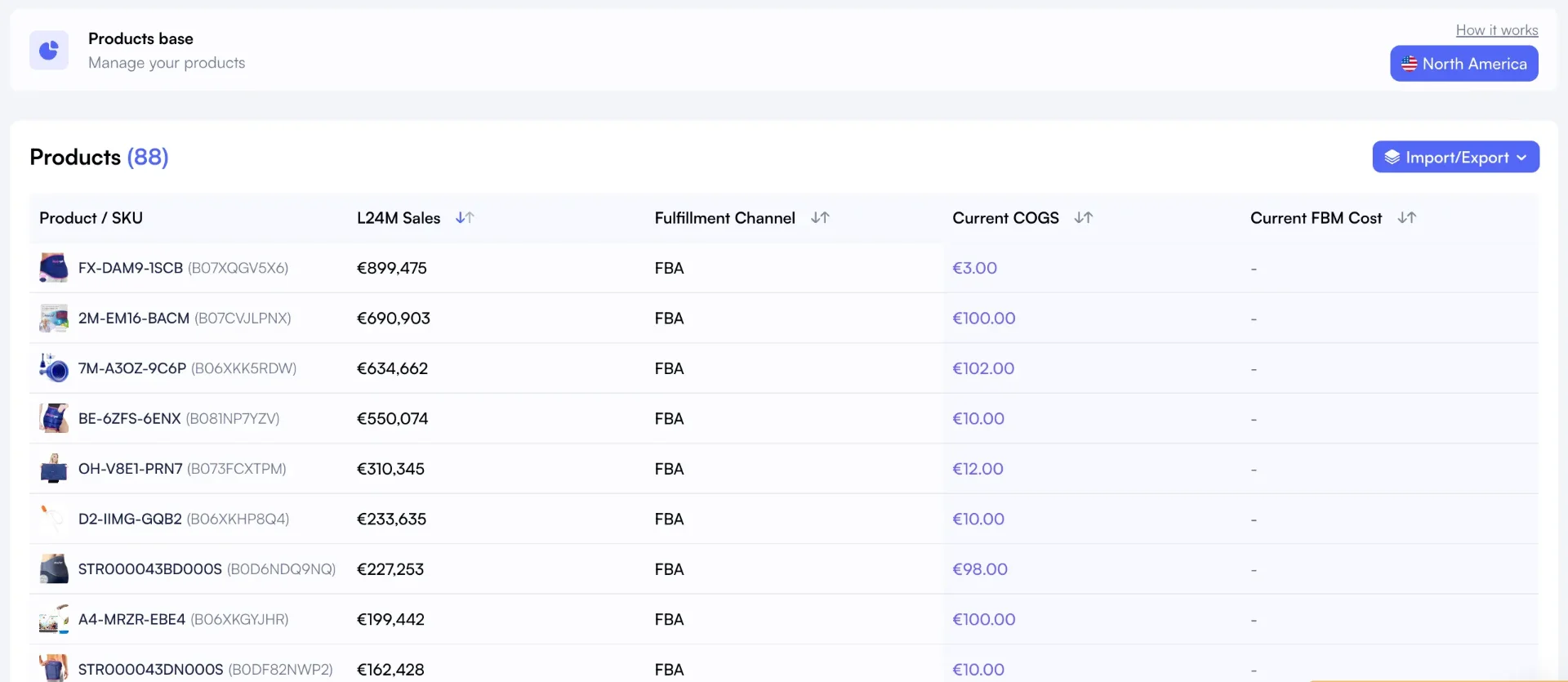
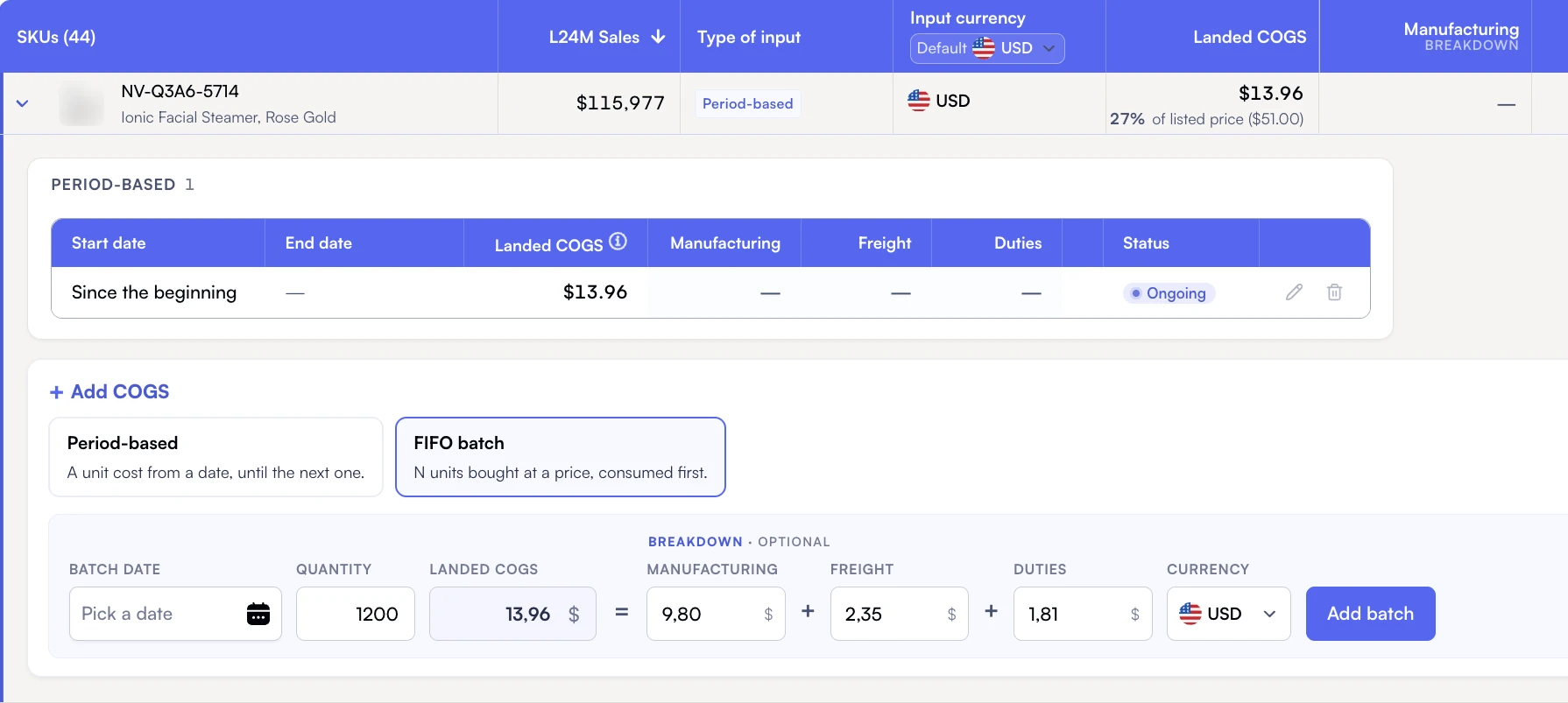
Nova's COGS manager handles price changes, currency fluctuations, and multi-supplier tracking automatically. Set it once, get accurate margins forever.

Related read
Amazon Seller Calculator: forecast fees and margin per SKU
Explore more expert insights to grow your Amazon business
Recover $1,500-$3,000 annually in lost inventory and overcharged fees. Complete guide to Amazon FBA reimbursements with step-by-step filing process.
Choosing between FBA and FBM impacts profit margins, operations, and scalability. Complete comparison with costs, benefits, and decision framework for 2026.
Every 2026 FBA fee change in one place: fulfillment rates, storage costs, inbound placement fees. Side-by-side comparison with 2025 rates so you see exactly what changed.